July 2002
Kildonan Presbyterian Cemetery manager Reverend Richard Gillanders had no idea about the background of the MacDonald Mausoleum until a few weeks ago.
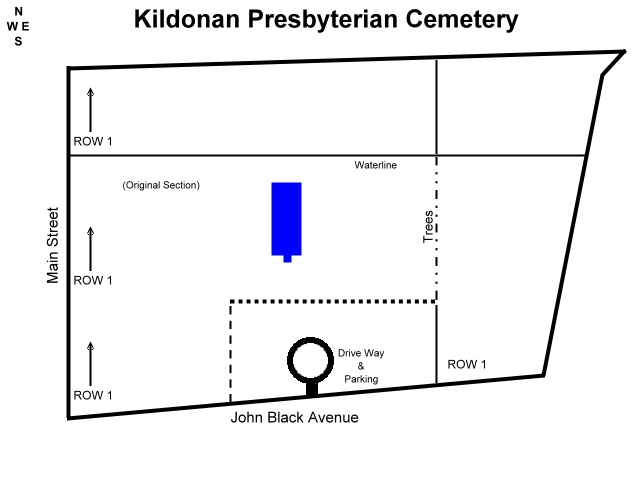
Kildonan Presbyterian is one of the oldest cemeteries in the Province of Manitoba. With a history spanning over 150 years, it is the final resting place for many of the founders and prominent citizens of Manitoba and the City of Winnipeg. It is tucked away, not far from the Red River, as you follow Main Street to the northern most reaches of the city. Entry is gained from John Black Avenue, named for John Black, the first Presbyterian minister who came to Kildonan in 1851 as religious leader for the Selkirk settlers. The settlers had arrived in 1812 and had been patiently awaiting the arrival of a minister of their own faith. In 1854 the spiritual centre of the community was completed in Kildonan Presbyterian Church, which still stands prominently in the graveyard. It was the first Presbyterian Church west of the Great Lakes.
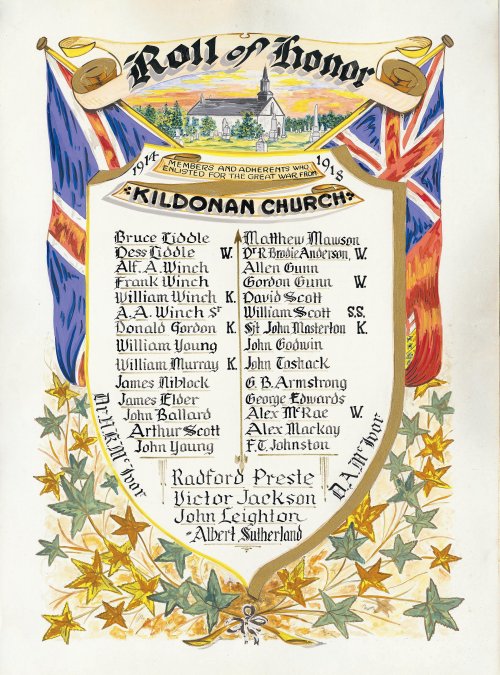
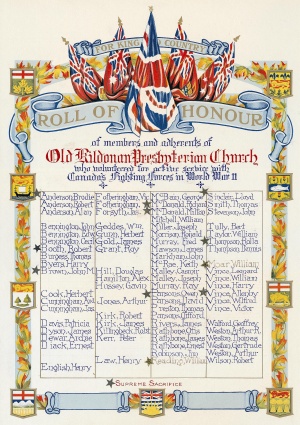
Scattered thoughout the cemetery are numerous military markers, serving as a reminder of the various conflicts Canada has been engaged in over the past century. Most are markers for veterans of the First and Second World Wars. This hallowed ground is a fitting place to remember the many young men who made the supreme sacrifice while fighting for their country. Among the headstones marking the Second World War Veterans is a large number of missing or killed in action while serving with the Royal Canadian Air Force. With Winnipeg at the center of the British Commonwealth Air Training Plan, many young men from the community trained and served overseas as aircrew.
Lt. Allan A. McLeod, V.C., R.A.F., is one of the youngest Victoria Cross winners ever, who shortly after returning home became a victim of the world-wide influenza epidemic in 1918.
Sgt. W.Y. Robertson, D.C.M., was killed at Passchendaele in 1917. (The Distinguished Conduct Medal was awarded to non-commissioned officers.)
Sqn. Ldr. Brodie Anderson, D.F.C was killed over Germany in 1944. His family is commemorated in one of the beautiful stained glass windows of the old church.
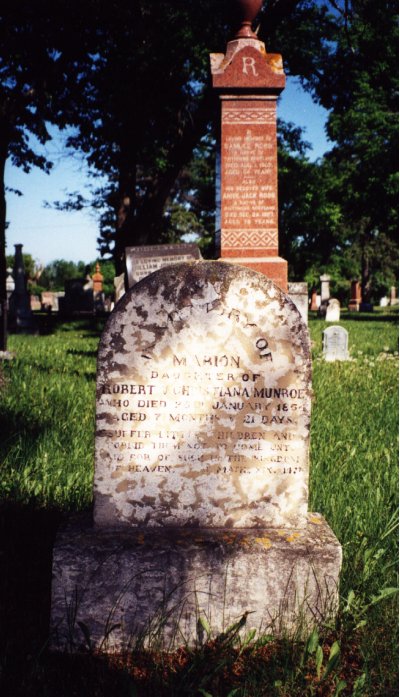
The oldest marker still existing is for little Marion Munroe, who died on the 25th of January 1854, at the age of seven months and 21 days. A large number of settler families buried infants and children in the cemetery, reflecting the high mortality rates of the young at this time. Survival was challenging in this remote, isolated community where medical services were not readily available.